


Peptide Batch Traceability: Guide for UK Research Labs
5 October 2026 · 15 min read
What does a purity result prove if the certificate can’t be matched to the vial in your hand? That gap is why peptide batch traceability matters: a batch is traceable when its identity, analytical evidence and handling records connect.
A purity figure can be difficult to assess on its own, and a certificate may not clearly identify the material received. For UK research labs, comparing the vial label with its supporting records is a practical part of receiving research peptides for in-vitro work.
This guide explains the components of a traceable batch record and how to assess a Certificate of Analysis (CoA) without treating one result as complete proof. It also sets out a consistent receipt and record-keeping process, including what to compare, document and retain. The aim is to maintain a clear, auditable link between the material received and the evidence used to assess it.
Key Takeaways
- Peptide batch traceability depends on a connected record, not a lot number alone. Identify which links help establish that connection.
- Compare the vial identifier with the Certificate of Analysis and related records to assess whether they refer to the same batch.
- Distinguish what identity evidence, purity assessment and custody records can each show. No single result establishes every quality attribute.
- Use a consistent receipt workflow to identify materials, compare documents, log findings and record discrepancies.
- Assess documentation for clarity and consistency. Transparent records support review, but don’t guarantee study results or replace laboratory controls.
Peptide batch traceability: what it means and why laboratories need it
Peptide batch traceability is the ability to follow a specific batch through its identification, analytical evidence and documented handling. It connects the material received with the records associated with it, allowing a laboratory to review what the batch is and which documents relate to it.
A batch or lot number is a starting identifier, not a complete traceability record. A number printed on a vial has limited value if it cannot be matched to supporting documentation. Similarly, a purity figure alone does not establish the vial’s identity, provenance or handling history. Traceability is the connected record; purity is one reported analytical attribute within it.
Documented manufacturing controls are one reason records matter. Good Manufacturing Practice (GMP) provides background on quality-management principles used in manufacturing, including controlled processes and documentation. A laboratory’s assessment should focus on the evidence available for the particular research material and batch, rather than assuming a general quality statement proves specific attributes.
What information should identify a peptide batch?
Start with the identifier and compare it across the vial label and each supporting document. It should match exactly, including any letters, numbers or separators. A similar-looking code is not enough to establish that records refer to the same batch.
Record the fields separately: product identity, stated quantity, batch or lot identifier, and the dates shown on relevant documents. These details serve different purposes. The product name identifies what is represented, the quantity records what is stated as supplied, and document dates help place the evidence in sequence. If a label or document is unclear, note the discrepancy rather than silently reconciling it.
Why traceability matters in in-vitro research
In-vitro work depends on records that let researchers interpret and review experimental conditions. If an unexpected result occurs, a traceable batch record can help investigators consider whether a material-related issue warrants review alongside procedural variation, instrument settings or other experimental factors.
Traceability also supports internal review by making the link between received material and retained evidence visible to colleagues or auditors. A consistent record can show which batch was used in a particular study and what documentation was available at the time. This strengthens the basis for investigation and reproducibility, but it cannot guarantee experimental outcomes or replace validated methods, appropriate controls and complete study records.
How a traceable peptide batch connects identity, testing and custody
A usable record chain lets a laboratory follow a batch from its assignment through the evidence associated with it and into laboratory receipt. Each record should connect to the same identifier. Otherwise, documents may describe related materials without showing that they concern the vial being reviewed.
- Batch assignment: A batch or lot reference is assigned and associated with the identified peptide material.
- Analytical assessment: Testing records identify the batch examined, the date of analysis and the methods reported, where those details are available.
- Release documentation: A Certificate of Analysis (CoA) or other supporting record reports selected findings for the identified batch.
- Dispatch and receipt: Dispatch and laboratory records document the hand-off, receipt and subsequent location of the material.
This sequence is a framework for examining records, not an assertion that every supplier uses the same process. Treat specific manufacturing, testing, release or transport details as established only when they appear in relevant batch-level evidence. MHRA guidance on implementing a quality assurance programme provides context for systematic oversight and record review in relevant laboratory settings.
From batch identifier to Certificate of Analysis
Compare the vial label directly with the CoA. Check the product name and batch reference first, then review the test date and reported analytical method where available. The document should be attributable to the material under review, rather than showing only a similar product name or a general result.
A CoA summarises specified analytical findings. It can support the assessment of those reported attributes, but it doesn’t establish every quality characteristic, handling event or feature of the material. If an identifier differs, a field is missing or the method isn’t stated, record the point as unresolved. Don’t amend codes or infer a match without documented evidence.
What custody and handling records can show
Dispatch and receipt records can document hand-offs between parties and the dates associated with them. They show what was recorded, not necessarily that particular storage or transport conditions were maintained throughout. Don’t treat a dispatch entry as proof of uninterrupted conditions unless the record provides that evidence.
On receipt, log the date, package condition and internal storage location alongside the batch identifier. Note any visible damage or discrepancy using the laboratory’s established procedure. These details extend the documentary chain beyond the supplied paperwork and help staff record where the material was received and placed.
For research procurement, a clearly identified research peptide supply option can be assessed by comparing the vial, batch records and receipt documentation.
Purity, identity and peptide batch traceability: what test results establish
A test result answers a defined question about a sample; it doesn’t automatically establish every attribute of a batch. For peptide batch traceability, read analytical evidence alongside the batch identifier and relevant custody records, keeping each type of evidence within its stated scope.
| Evidence type | What it can support | What it does not establish alone |
|---|---|---|
| Identity evidence | Whether results from a stated method are consistent with the named material. | Batch custody or every aspect of composition and quality. |
| Purity assessment | The proportion or profile reported under the method and conditions used. | Provenance, handling history or identity beyond the test’s scope. |
| Custody documentation | Recorded hand-offs, receipt details and handling entries. | Analytical identity or purity unless supported by relevant testing. |
A purity percentage alone cannot show that the tested sample came from the vial received or document how that material was handled. Test interpretation depends on the method, sample and documented scope.
What HPLC and mass spectrometry can contribute
High-performance liquid chromatography (HPLC) separates components in a sample. A resulting chromatogram may support a purity assessment under the stated method, but it isn’t, by itself, complete verification of identity, provenance or all possible impurities.
Mass spectrometry (MS) measures ions according to their mass-to-charge ratio and can provide molecular-mass evidence relevant to identity assessment. What that evidence supports depends on the analyte, sample preparation and test design. The methods have different roles; neither should be treated as universally conclusive.
How to interpret a certificate without overclaiming
Review the named material, batch reference, analytical method, reported result and report date. Check that the batch reference corresponds to the material under review, then note which attribute the result addresses and whether the method is described clearly enough for the intended assessment.
A certificate records specified findings; it doesn’t independently confirm every characteristic of a product. The same applies to a purity figure or an accreditation logo: each needs context, including the scope of the test or accreditation. Record what the document demonstrates, what remains outside its scope and any fields that are missing or unclear. This measured approach helps laboratories assess evidence without turning a single result into a broader claim.
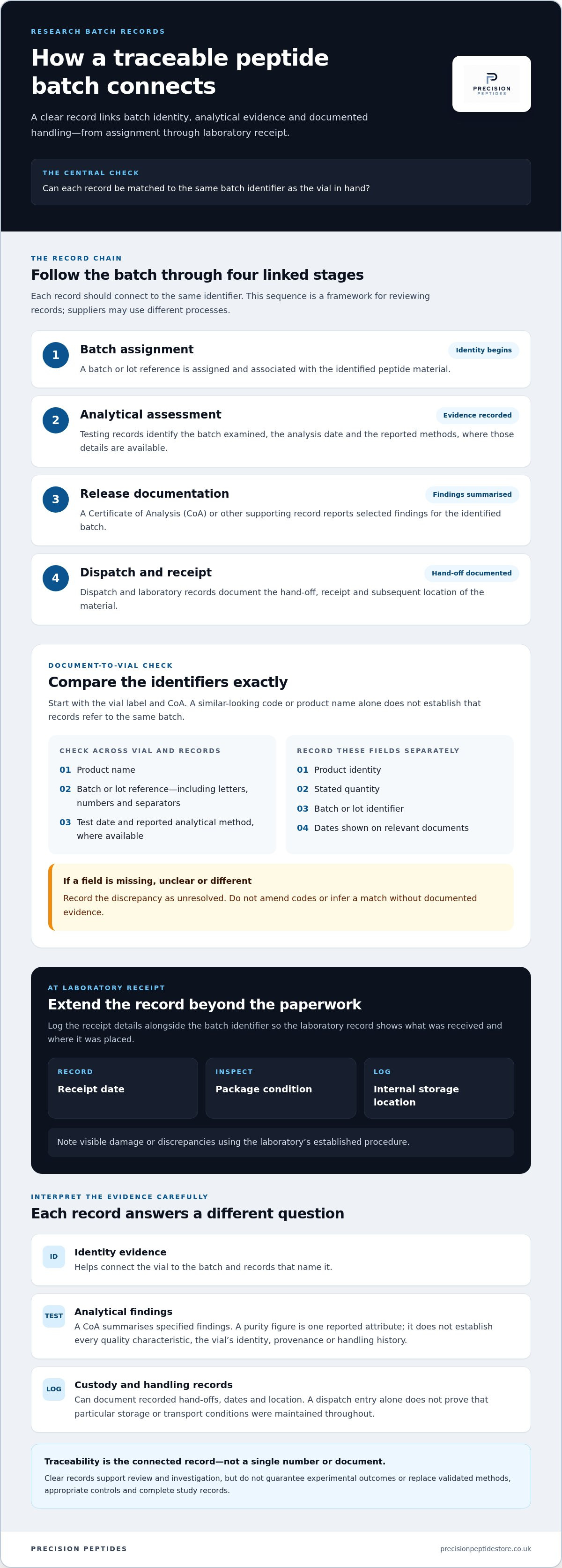
A laboratory workflow for checking and recording a peptide batch
A consistent receipt process turns the documents supplied with a research peptide into a usable laboratory record. The aim is straightforward: identify the material, compare its identifiers with supporting paperwork, record the outcome and manage any discrepancy through the laboratory’s established procedure. This supports peptide batch traceability without extending into instructions for human use.
A receipt-to-record checklist for research teams
Adapt this checklist to the laboratory’s own procedures and record system:
- Receive: Record the receipt date and inspect the package. Note its condition and any visible damage or irregularity.
- Identify: Enter the product description and the batch or lot identifier shown on the received label.
- Compare: Check the identifier and product name against the corresponding analytical document. Record the document date and note missing or inconsistent details.
- Log: Add receipt observations, document references and the material’s internal storage location to the procurement or research record.
- Retain: File the product label, batch documentation and receipt notes together, so the link between the physical material and its records remains accessible.
Use a controlled naming convention that makes records searchable, such as product description, batch identifier and receipt date. Apply the laboratory’s document-control approach consistently, including versioning or access records where these form part of its established system. Avoid renaming or replacing original supplier documents in a way that obscures their source.
What to do when records do not match
If a batch identifier, product description or document detail conflicts, pause routine record closure and follow the laboratory’s discrepancy process. Keep the material and its records identifiable while the issue is reviewed, in line with internal procedures. A mismatch calls for resolution, not an assumed explanation.
Record the discrepancy plainly: what differs, which material and documents are affected, when the issue was identified and what review actions followed. Preserve source records unchanged; add dated notes or controlled amendments rather than editing the original evidence. If the issue is resolved, document the basis for that conclusion. If it remains unresolved, retain that status in the record.
An unresolved documentation issue does not, by itself, prove a product defect. It means the available records have not yet established a clear match. Keeping that distinction explicit supports proportionate review and a defensible audit trail.
For in-vitro research procurement, explore research peptide options and apply your laboratory’s receipt and record-review process to the material received.
Choosing research peptide supplies through transparent batch records
Supplier descriptions can help identify what documentation is said to exist, but they aren’t a substitute for reviewing records tied to the particular batch received. A practical assessment considers whether identifiers connect, analytical information is interpretable and records can be retained within the laboratory’s own documentation process.
Three checks for assessing batch-document transparency
- Check identifier consistency. Compare the batch reference on the vial label with the identifier on the analytical paperwork. A clear match helps connect the physical material to the document; a general product name alone does not establish that link.
- Review the analytical detail. Look for the named material, reported method, dated result and a defined description of what was assessed. Broad phrases such as “quality tested” provide less information than a result with a stated method and scope. Record what the evidence supports, and avoid extending it to attributes it doesn’t address.
- Consider record accessibility. Check whether the relevant documents can be retained alongside procurement and receipt notes, then retrieved for review. A record that cannot be reliably associated with the received batch has limited practical value in an audit or later investigation.
These checks provide a neutral basis for comparing documentation, not a ranking of suppliers. Keep supplier claims distinct from batch-specific evidence, and assess the scope of each result on its own terms. Transparent records enable review; they don’t guarantee study results or replace appropriate laboratory controls, validated methods and complete research records.
For a related procurement perspective, see this Retatrutide 10mg research vial sourcing guide. Consider it alongside your laboratory’s own requirements for evaluating research materials and retaining procurement documentation.
Research-use boundaries and responsible next steps
Precision Peptides’ peptides are designated for in-vitro laboratory and scientific research only. They are not clinical or therapeutic medicines and are not for human use or compounding. Keep procurement decisions within the intended research context, and follow your laboratory’s procedures for assessing and documenting materials.
Peptide batch traceability is one part of responsible procurement: clear identifiers, relevant analytical records and an auditable route into laboratory records. To review research materials in that context, view the research peptide range.
Make batch review part of your research workflow
Reliable peptide batch traceability depends on a clear connection between the vial, batch-specific analytical evidence and documented receipt. A purity result is only one part of that picture: review what the method establishes, check identifiers for consistency and retain records together. A repeatable intake process also makes discrepancies easier to record and investigate.
For UK laboratories sourcing research materials, Precision Peptides is a UK-based online retailer of research peptides and laboratory biochemicals. Its range includes research compounds such as Retatrutide, Mounjaro, BPC-157, TB-500, GHK-Cu and NAD+, alongside research blends including Wolverine and KLOW. Products are designated for in-vitro laboratory and scientific research only, not clinical or therapeutic use. Apply your laboratory’s own controls and review the documentation relevant to each batch.
View the research peptide range to explore research materials for your procurement and record-review process. A consistent approach helps keep material identity and supporting evidence clear, giving your team a sounder basis for organised, reproducible research.
Frequently Asked Questions
What does peptide batch traceability mean?
Peptide batch traceability means being able to follow a specific batch through its identification, relevant analytical records and documented handling. The vial’s batch or lot identifier should connect clearly to supporting paperwork and the laboratory’s receipt records. This creates an auditable record of which material was received and what evidence relates to it. Traceability is broader than a purity claim, which reports only a particular analytical finding.
Is a batch number enough to verify a peptide?
No. A batch number is an identifier, not a complete verification record. It becomes useful when it matches across the vial label, batch-specific analytical documents and laboratory receipt notes. Review the product description and other relevant document details as well. If a code is missing, unclear or inconsistent, record the discrepancy and follow the laboratory’s review process rather than assuming similar identifiers refer to the same batch.
Can a Certificate of Analysis prove peptide batch traceability?
A Certificate of Analysis (CoA) can contribute to peptide batch traceability if it identifies the material and batch and reports relevant analytical information. However, it doesn’t necessarily document dispatch, receipt or subsequent handling, and it doesn’t establish every quality attribute. Compare its batch reference with the vial label and consider the stated method, result and report date. Treat the CoA as one part of the evidence chain, not complete proof by itself.
What is the difference between peptide purity and batch traceability?
Purity is an analytical result describing a sample under a stated method and scope. Batch traceability links a specific material to its identifiers, associated evidence and documented handling. A purity percentage alone cannot show that the tested sample corresponds to the vial received or establish its custody history. Assess the reported purity in context, then separately check whether the batch documentation connects the analytical record to the physical material.
How can a laboratory check whether a peptide certificate matches its vial?
Compare the product name and batch or lot identifier printed on the vial with those shown on the certificate. Check that the identifiers match exactly, then review the report date, analytical method and stated result. Record missing or inconsistent fields rather than silently correcting them or inferring a match. If a discrepancy remains, document it and use the laboratory’s established review process before closing the receipt record.
Does peptide batch traceability guarantee reliable research results?
No. Traceability supports clear records and helps a laboratory review which material was received and what evidence was associated with it. It doesn’t guarantee experimental outcomes, establish every product characteristic or replace suitable controls, validated methods and complete study records. If results are unexpected, batch documentation can be one source of information to consider alongside procedural variation and other relevant experimental factors.
What records should a laboratory retain when receiving a research peptide?
Retain the product label or a clear record of its details, the relevant batch documentation and receipt notes together. Record the product description, batch identifier, receipt date, package condition and internal storage location. Use a consistent naming convention so the records can be retrieved and reviewed. Preserve source documents unchanged; document any discrepancy and subsequent review actions in the appropriate controlled record.
Frequently Asked Questions
Start with the identifier and compare it across the vial label and each supporting document. It should match exactly, including any letters, numbers or separators. A similar-looking code is not enough to establish that records refer to the same batch. Record the fields separately: product identity, stated quantity, batch or lot identifier, and the dates shown on relevant documents. These details serve different purposes. The product name identifies what is represented, the quantity records what is stated as supplied, and document dates help place the evidence in sequence. If a label or document is unclear, note the discrepancy rather than silently reconciling it.
Peptide batch traceability means being able to follow a specific batch through its identification, relevant analytical records and documented handling. The vial’s batch or lot identifier should connect clearly to supporting paperwork and the laboratory’s receipt records. This creates an auditable record of which material was received and what evidence relates to it. Traceability is broader than a purity claim, which reports only a particular analytical finding.
No. A batch number is an identifier, not a complete verification record. It becomes useful when it matches across the vial label, batch-specific analytical documents and laboratory receipt notes. Review the product description and other relevant document details as well. If a code is missing, unclear or inconsistent, record the discrepancy and follow the laboratory’s review process rather than assuming similar identifiers refer to the same batch.
A Certificate of Analysis (CoA) can contribute to peptide batch traceability if it identifies the material and batch and reports relevant analytical information. However, it doesn’t necessarily document dispatch, receipt or subsequent handling, and it doesn’t establish every quality attribute. Compare its batch reference with the vial label and consider the stated method, result and report date. Treat the CoA as one part of the evidence chain, not complete proof by itself.
Purity is an analytical result describing a sample under a stated method and scope. Batch traceability links a specific material to its identifiers, associated evidence and documented handling. A purity percentage alone cannot show that the tested sample corresponds to the vial received or establish its custody history. Assess the reported purity in context, then separately check whether the batch documentation connects the analytical record to the physical material.
Compare the product name and batch or lot identifier printed on the vial with those shown on the certificate. Check that the identifiers match exactly, then review the report date, analytical method and stated result. Record missing or inconsistent fields rather than silently correcting them or inferring a match. If a discrepancy remains, document it and use the laboratory’s established review process before closing the receipt record.
No. Traceability supports clear records and helps a laboratory review which material was received and what evidence was associated with it. It doesn’t guarantee experimental outcomes, establish every product characteristic or replace suitable controls, validated methods and complete study records. If results are unexpected, batch documentation can be one source of information to consider alongside procedural variation and other relevant experimental factors.
Retain the product label or a clear record of its details, the relevant batch documentation and receipt notes together. Record the product description, batch identifier, receipt date, package condition and internal storage location. Use a consistent naming convention so the records can be retrieved and reviewed. Preserve source documents unchanged; document any discrepancy and subsequent review actions in the appropriate controlled record.